Warsaw: Capital of Poland
Rebuilt from rubble after WWII destroyed 85% of it. Warsaw rose from the ashes to become the economic powerhouse of Central Europe — the Phoenix City.
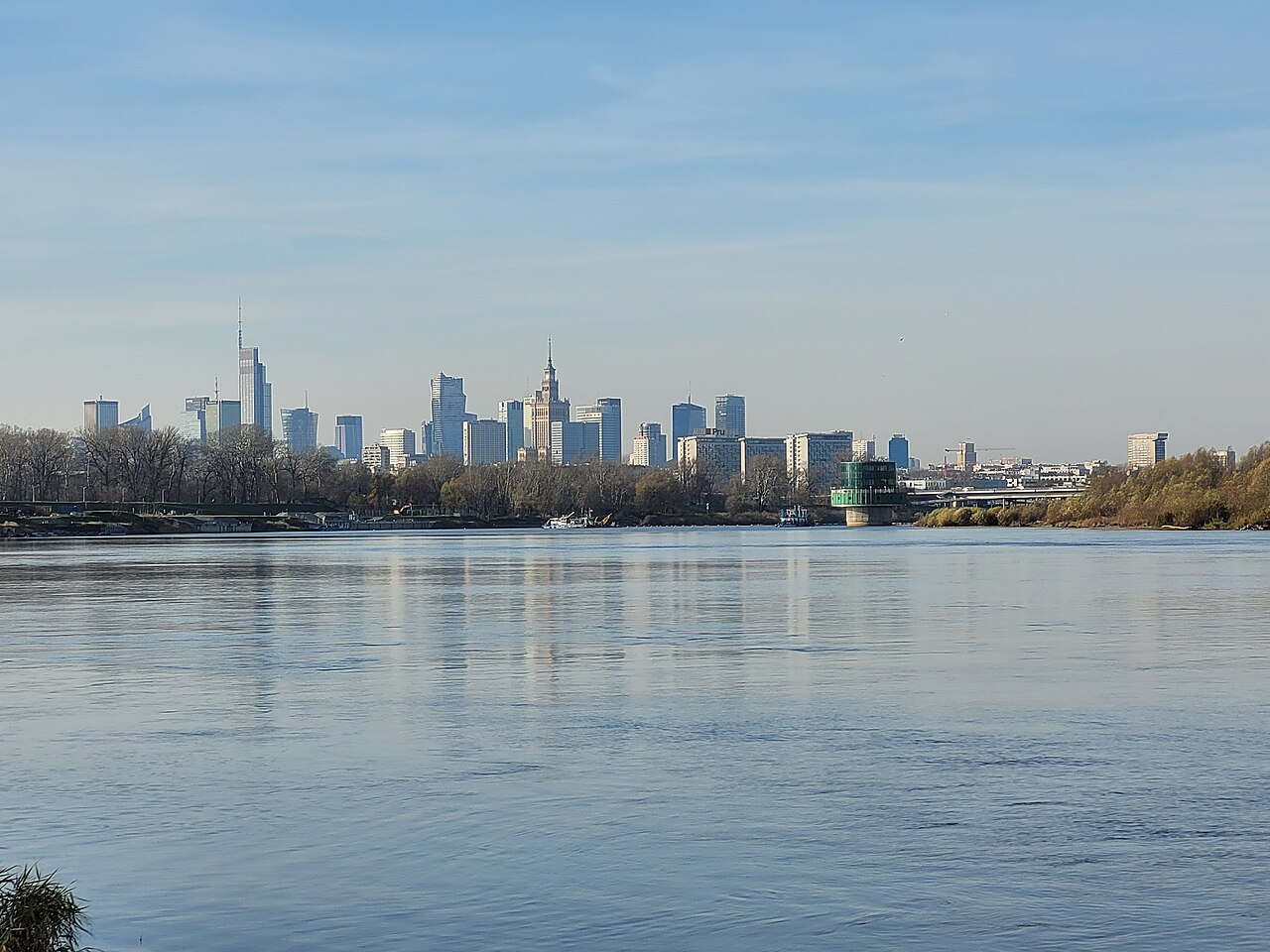
Warsaw Old Town panorama
Public domain (Wikimedia Commons)

| Population | 1.8 million (city); 3.1 million (metro) |
| Founded | c. 13th century on the Vistula river |
| Language | Polish |
| Capital since | 1596 (replaced Kraków) |
| WWII destruction | 85% of the city destroyed |
| Nickname | The Phoenix City |
History
From Duchy to Capital
Warsaw grew from a small settlement on the western bank of the Vistula river in the 13th century. It replaced Kraków as Poland's capital in 1596 under King Sigismund III Vasa, whose dynasty sought a more central location. Warsaw's position made it the epicentre of Poland's shifting fortunes — the city was captured by Sweden in the Great Northern War, partitioned between Russia, Prussia, and Austria three times between 1772 and 1795 (erasing Poland from the map for 123 years), and liberated only in 1918 when an independent Polish Republic was re-established.
WWII: Destruction and Uprising
No European capital suffered more in WWII than Warsaw. Germany invaded Poland on September 1, 1939 — the act that triggered the war. During the occupation, the Germans established the Warsaw Ghetto, imprisoning 400,000 Jews; the Ghetto Uprising of 1943 was crushed after four weeks. In August 1944, the Polish Home Army (Armia Krajowa) launched the Warsaw Uprising — 63 days of street fighting against German forces, hoping the approaching Soviet Army would assist. The Soviets stopped at the Vistula's east bank and waited. The uprising was crushed; in reprisal, Heinrich Himmler ordered the systematic demolition of Warsaw. By January 1945, when Soviet troops finally entered, 85% of the city had been razed.
Rebuilding from Paintings
Warsaw's Old Town (Stare Miasto) was rebuilt after the war in one of history's most extraordinary acts of reconstruction. Because almost nothing remained, architects worked from 18th-century vedute paintings by Bernardo Bellotto (nephew of Canaletto), who had been court painter in Warsaw and documented its streets with exceptional precision. The reconstructed Old Town was recognised as a UNESCO World Heritage Site in 1980 — not as an original historic site, but as a symbol of collective human effort to restore what war had erased.
Landmarks & Culture
Marie Curie and Chopin
Marie Curie (1867–1934) was born in Warsaw as Maria Skłodowska. She remains the only person to have won Nobel Prizes in two different sciences — Physics (1903) and Chemistry (1911). The Fryderyk Chopin Museum in Warsaw honours the composer born nearby in Żelazowa Wola; the city hosts the International Chopin Piano Competition every five years, one of the world's most prestigious classical music contests.
Palace of Culture and Science
The Palace of Culture and Science (PKiN) — Stalin's "gift" to Poland, completed 1955 — stands 237 metres tall and remains Poland's tallest building. It was built by Soviet workers in the Socialist Realist style and loathed by many Poles as a symbol of Soviet domination. Today it houses theatres, universities, cinemas, and a viewing terrace, and has become an unlikely cultural landmark. The best view of Warsaw, locals say, is from the PKiN's top — because from there, you can't see the PKiN.
Fast Facts
- The Warsaw Pact (1955) — Soviet-led military alliance — was signed in Warsaw, though Poland was not a willing participant
- Poland joined NATO in 1999 and the EU in 2004
- Warsaw has been the fastest-growing large economy in the EU since 1989
- The Vistula (Wisła) is Poland's longest river, flowing north to the Baltic Sea
- Warsaw's Jewish community was once the largest in Europe — 375,000 people in 1939; virtually none survived the war
📜 Notable Quote
"Warsaw was not rebuilt — Warsaw was reborn."
Common sentiment among Polish historians about the postwar reconstruction.