Riga: Capital of Latvia
The Art Nouveau capital of the world — 700+ ornate facades, the world's first decorated Christmas tree (1510), and the city where the Baltic Way human chain began.
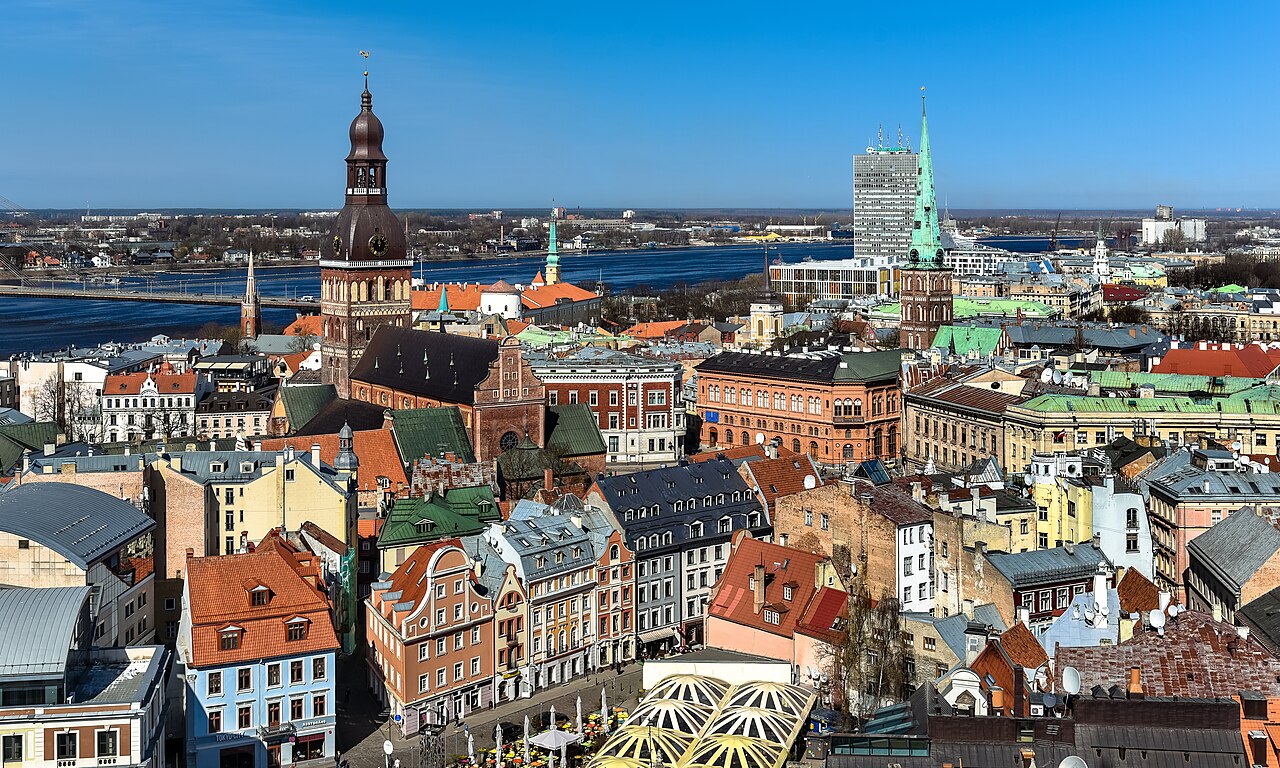
Riga old town panorama
Public domain (Wikimedia Commons)
| Founded | 1201 by Bishop Albert |
| Population | ~600,000 (largest Baltic city) |
| UNESCO | Historic Centre (1997) |
| Art Nouveau | 700+ buildings — world's highest concentration |
| Independence | Nov 18, 1918 / Aug 21, 1991 |
History
The Hanseatic City
Riga was founded in 1201 by Bishop Albert of Buxhoeveden as a base for the Christianization of the Baltic region. It rapidly grew into one of the most important members of the Hanseatic League — the powerful medieval merchant network. Riga's deep-water port funneled grain, timber, furs, and amber between Russia and Western Europe for centuries.
800 Years of Changing Rulers
Riga has been controlled by the Livonian Order, the Polish-Lithuanian Commonwealth, the Swedish Empire, and the Russian Empire. Under Russian rule in the late 19th century, a construction boom gave Riga its extraordinary architectural heritage. Latvia declared independence on November 18, 1918, was occupied by the Soviet Union in 1940, then Nazi Germany 1941–44, then the Soviets again until re-independence on August 21, 1991.
The Baltic Way
On August 23, 1989 — the 50th anniversary of the Molotov-Ribbentrop Pact — approximately two million people formed a human chain stretching 675 km from Vilnius through Riga to Tallinn. The Baltic Way remains one of history's most powerful acts of nonviolent protest.
Landmarks & Culture
Art Nouveau Capital of the World
No city on Earth has a higher concentration of Art Nouveau architecture than Riga. Over 700 buildings feature ornate facades, sinuous lines, and grotesque masks. The most celebrated architect was Mikhail Eisenstein — whose extravagant buildings on Alberta iela are the highlight of any visit. In a remarkable footnote, Mikhail Eisenstein was the father of Sergei Eisenstein, the film director who revolutionized cinema with Battleship Potemkin.
The Freedom Monument
Milda — as locals call her — stands 42 meters tall in the heart of Riga. Erected in 1935, she holds three golden stars representing Latvia's three cultural regions. During Soviet occupation, placing flowers at her base was an act of quiet defiance. Today she remains the most powerful symbol of Latvian national identity.
Fast Facts
- The world's first decorated Christmas tree was reportedly erected at Riga's Town Hall Square in 1510.
- Latvian and Lithuanian are the only two surviving Baltic languages — the closest living relatives of ancient Proto-Indo-European.
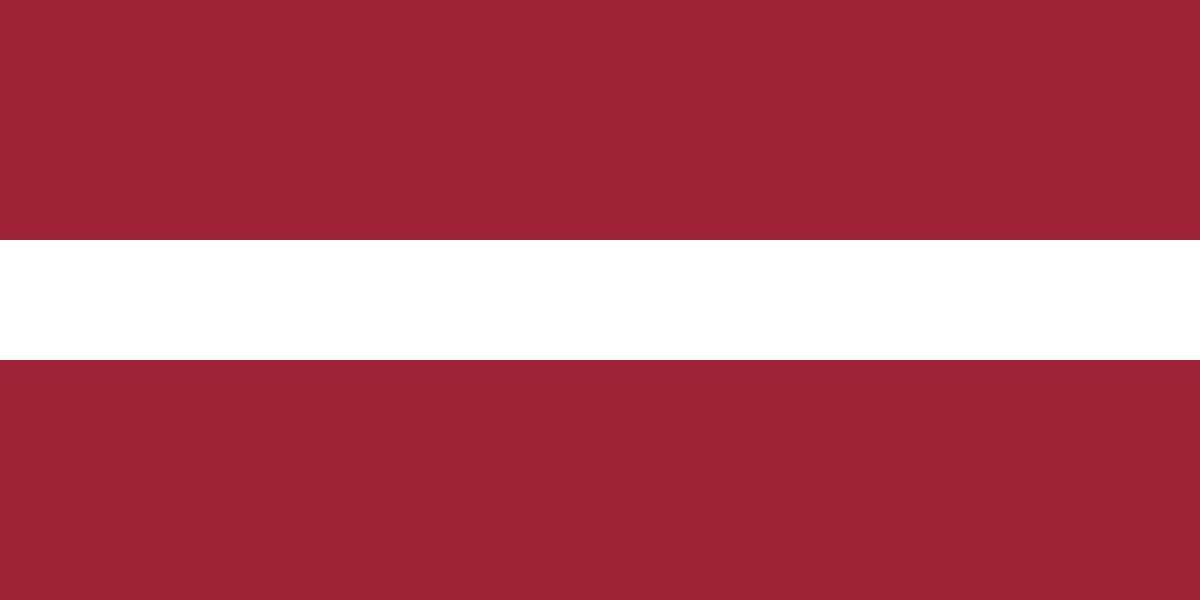
- The Latvian flag design (dark red, white, dark red) is documented since 1280 AD.
- Latvia has one of the fastest internet connections per capita in the world.
- Five enormous WWII-era Zeppelin hangars now house Riga's Central Market — a UNESCO-listed structure.
📊 Latvia in Numbers
- Art Nouveau buildings in Riga: 700+ (world's highest concentration)
- Baltic Way human chain length: 675 km across three countries
- Latvian flag documented since: 1280 AD
- First independence: November 18, 1918