Podgorica: Capital of Montenegro
Once called Titograd, Montenegro's compact capital sits at a crossroads of rivers, near Roman ruins, in Europe's youngest UN-recognised state.
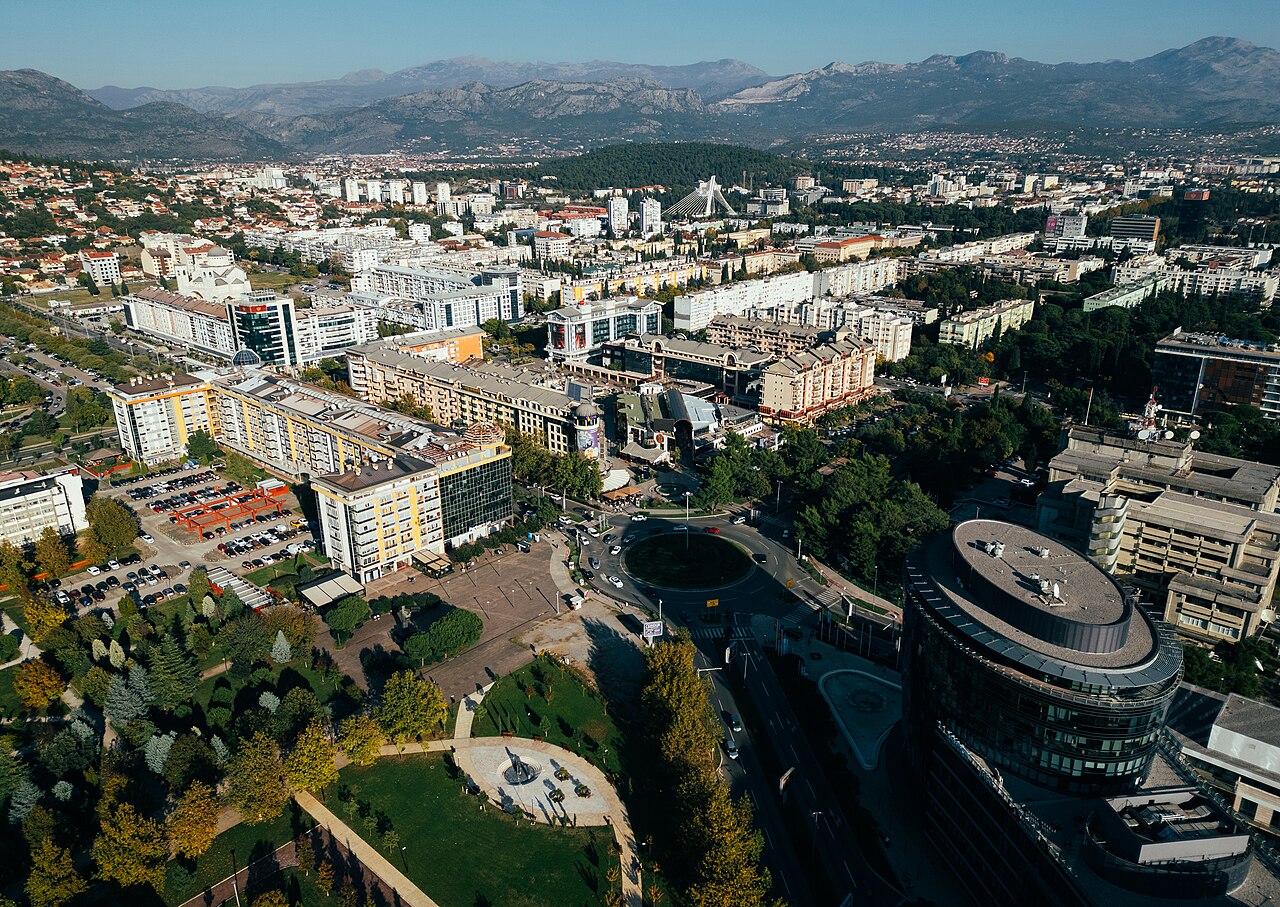
Millennium Bridge, Podgorica
Public domain (Wikimedia Commons)
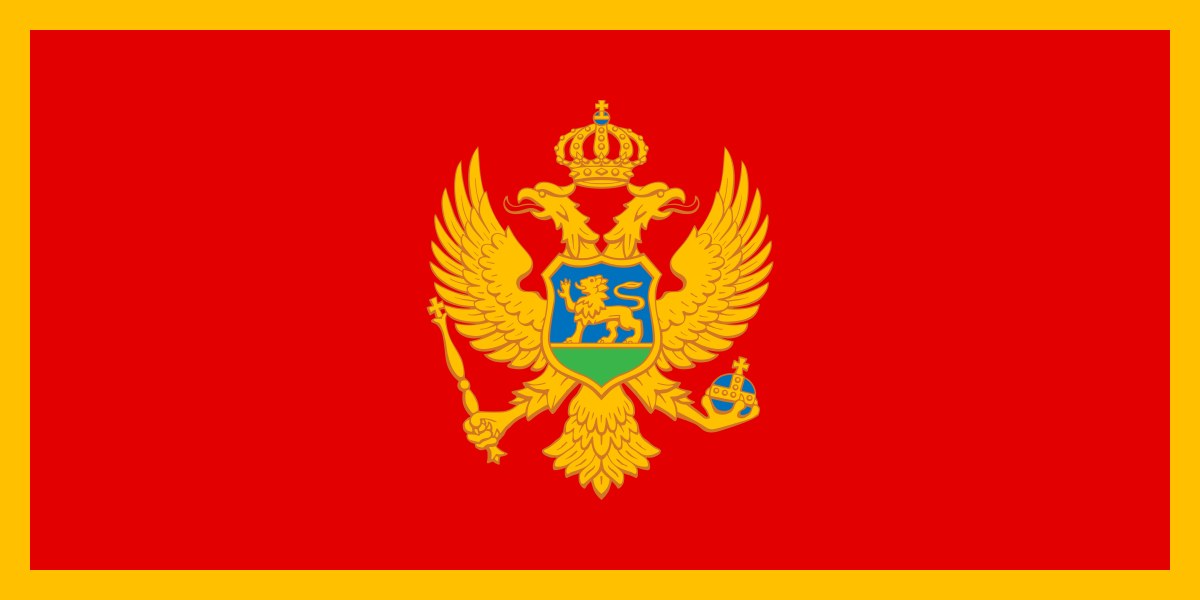
| Population | ~170,000 — smallest capital in this group |
| Former name | Titograd (1946–1992) |
| Independence | June 3, 2006 |
| NATO member | 2017 |
| Nearby ruins | Roman Doclea (1st–4th century AD) |
| River | Morača (and Ribnica) |
History
Roman Doclea: Capital Before Podgorica
Before the modern city existed, the most important settlement in the area was Doclea — a Roman city founded in the 1st century AD and by the 3rd century one of the most significant urban centres in the western Balkans. Doclea reached its peak under the Emperor Diocletian (reigned 284–305 AD), who was himself of Illyrian origin from this region. The ruins of Doclea — forum, basilica, thermae, and city walls — lie about 3 km north of the modern city centre and can be visited today. The city declined following Slavic migrations in the 6th–7th centuries. The settlement that would become Podgorica grew up nearby, at the confluence of the Morača and Ribnica rivers, developing as a modest market town under Ottoman rule from the 15th century until 1878.
Titograd: A City Renamed for an Ideology
During WWII, Podgorica was heavily bombed by Allied forces targeting the German occupation — the city was struck by 70 air raids, leaving it almost entirely destroyed. After the war, it was rebuilt from scratch as a planned socialist city and renamed Titograd in 1946 in honour of Yugoslav leader Josip Broz Tito. Wide boulevards, modernist blocks, and public institutions replaced the Ottoman and pre-war fabric. When Yugoslavia began to dissolve, Montenegro held a referendum in 1992 and voted to remain in a rump Yugoslavia with Serbia. After decades of political change, the city reverted to its original name Podgorica in 1992.
Montenegro's Independence: Europe's Newest State
On June 3, 2006, Montenegro declared independence from the union with Serbia, following a referendum in which 55.5% voted for independence — just barely crossing the required 55% threshold set by the European Union. Montenegro became one of the world's newest independent states and the last country to emerge from the dissolution of Yugoslavia (before Kosovo's declaration in 2008). Crucially, Montenegro became a NATO member in 2017 — a controversial decision given its historical ties to Serbia and Russia. The country is also an EU candidate, with accession negotiations ongoing since 2012. Montenegro's name derives from Venetian Italian for "Black Mountain" — referring to the dark appearance of Mount Lovćen.
Landmarks & Culture
The Morača River and Millennium Bridge
Podgorica sits at the confluence of the Morača and Ribnica rivers, which give the city its distinctive character. The turquoise Morača — fed by mountain springs — runs through a dramatic canyon just north of the city. The modern Millennium Bridge, completed in 2005, is the city's most recognisable contemporary landmark, its elegant cable-stay design standing tall above the river. The medieval Clock Tower (Sahat Kula) and the Old Town (Stara Varoš) quarter survive from the Ottoman period, though most of the city is modernist.
Fast Facts
- Montenegro uses the euro as its currency — despite not being an EU member, it adopted the euro unilaterally in 2002
- The country's name means "Black Mountain" in Venetian Italian — a reference to the dark appearance of Mount Lovćen
- Montenegro is one of Europe's most tourism-dependent economies, with the Adriatic coast (Budva, Kotor) attracting millions of visitors
- Kotor — a walled medieval city on the Adriatic — is a UNESCO World Heritage Site and Montenegro's most visited destination
- The Bay of Kotor is often mistaken for a fjord; it is technically the southernmost fjord-like inlet in Europe, though geologically it is a submerged river canyon
📊 Montenegro in Numbers
- Population: ~620,000 — one of Europe's smallest countries
- Area: 13,812 km² — roughly the size of Northern Ireland
- Montenegro's independence referendum passed by just 0.5% above the required 55% threshold
- The country has 293 km of Adriatic coastline
- Montenegro joined NATO in 2017, becoming the alliance's 29th member