Luxembourg City: Capital of Luxembourg
The world's only remaining Grand Duchy, the EU's richest country per capita, and the city whose medieval fortress carved 23 kilometres of tunnels into solid rock — once called the Gibraltar of the North.
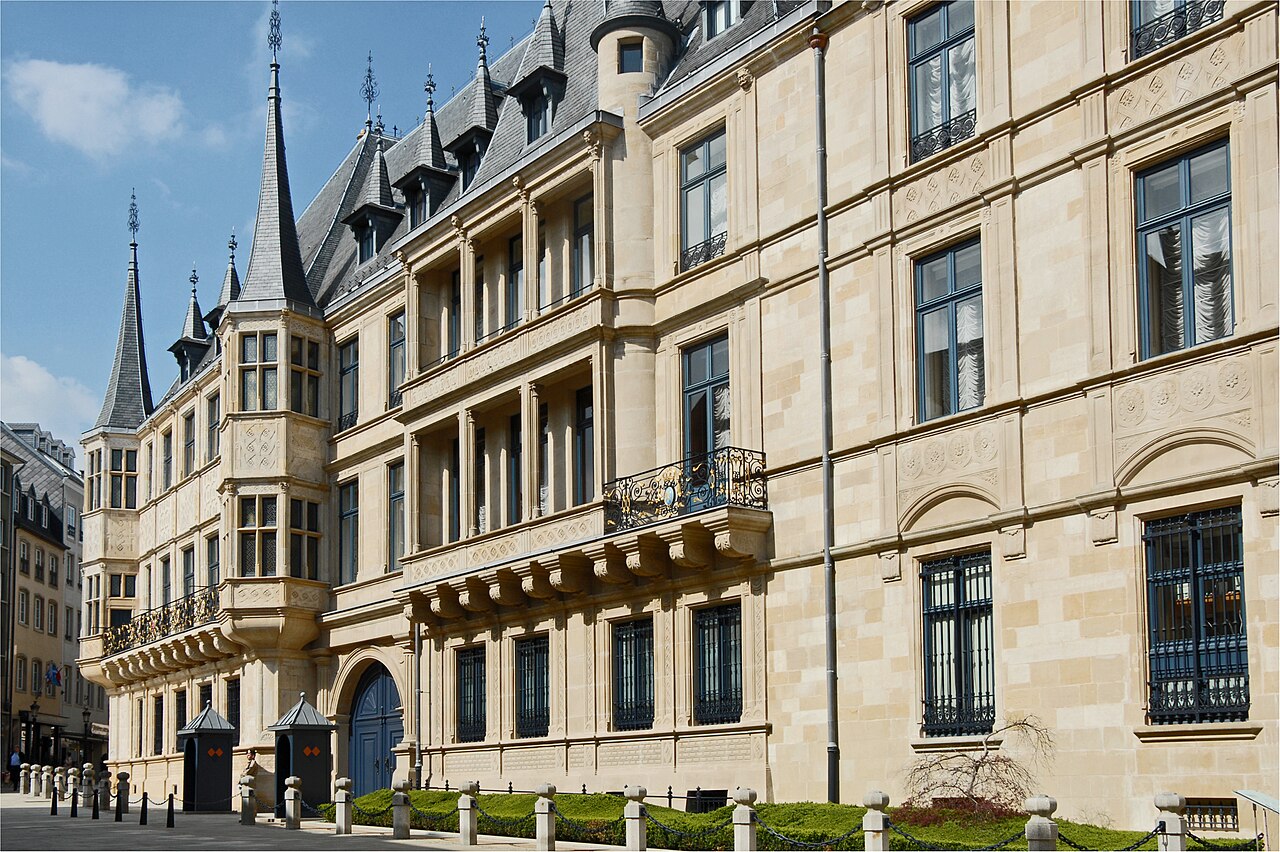
The Bock Casemates above the Alzette valley
Public domain (Wikimedia Commons)
| Population | 125,000 (city); 660,000 (country) |
| Founded | 963 AD, fortress by Siegfried of Ardennes |
| Head of state | Grand Duke Henri (only Grand Duchy in world) |
| GDP per capita | Highest in the EU (approx. €120,000) |
| Languages | Luxembourgish, French, German (all official) |
History
The Gibraltar of the North
Luxembourg City's history is inseparable from its rock. In 963 AD, Count Siegfried of Ardennes acquired a rocky promontory above the Alzette and Pétrusse valleys and built a fortress on it. Over the following nine centuries, this fortress was expanded, strengthened, and carved into an extraordinary system of underground fortifications — the Bock Casemates: 23 kilometres of tunnels blasted through solid sandstone rock, capable of sheltering 35,000 soldiers and their horses. The fortifications were so formidable that military engineers nicknamed Luxembourg "the Gibraltar of the North" — considered virtually impregnable. Under the Treaty of London (1867), the great powers ordered the fortress demolished and Luxembourg declared permanently neutral; the destruction took 16 years and removed most of the above-ground walls, but the casemates survive as a UNESCO World Heritage Site.
The Only Grand Duchy
Luxembourg is the world's only remaining Grand Duchy — a monarchy headed by a Grand Duke rather than a King or Queen. The title dates to 1815, when the Congress of Vienna created the Grand Duchy of Luxembourg as a personal possession of the King of the Netherlands while also making it a member of the German Confederation. Full independence came in 1867. Today Luxembourg is a constitutional monarchy under Grand Duke Henri, who has reigned since 2000. Despite its tiny size (2,586 km² — roughly the size of Rhode Island), Luxembourg punches far above its weight geopolitically.
The Schengen Agreement — Signed on a Boat
On June 14, 1985, representatives of France, West Germany, Belgium, the Netherlands, and Luxembourg met on a riverboat — the MS Princess Marie-Astrid — moored on the Moselle River near the village of Schengen, Luxembourg. There they signed the Schengen Agreement, which abolished passport controls between the five countries. The agreement, later expanded to 27 countries, created the largest zone of free movement in the world. Schengen village (population: ~500) gave its name to a geopolitical arrangement covering over 400 million people — because no one could agree which city to hold the signing in.
Landmarks & Culture
The European Court of Justice
Luxembourg City hosts several of the EU's most important institutions, most notably the European Court of Justice (ECJ) — the highest court in the EU, which interprets EU law and settles disputes between member states. The ECJ's striking golden towers on the Kirchberg Plateau make Luxembourg City as significant to EU law as Brussels is to EU politics. The city also hosts the European Court of Auditors and the General Secretariat of the European Parliament.
The Ville Haute and the Corniche
The historic upper city (Ville Haute) sits on a rocky plateau above two river valleys, connected to the lower quarters by bridges and the remains of the medieval fortifications. The Chemin de la Corniche, running along the old city walls above the Alzette valley, has been called "Europe's most beautiful balcony" — a promenade offering views across the lower city, the Alzette gorge, and the spires of the Grund quarter below.
Fast Facts
- Luxembourg has the highest GDP per capita in the EU — driven by finance, steel, and EU institutions
- Nearly 47% of Luxembourg's workforce commutes in daily from France, Belgium, and Germany — the country has more cross-border workers than citizens
- Luxembourg was a founding member of NATO (1949), the European Coal and Steel Community (1951), and the European Economic Community (1957)
- The Bock Casemates' 23 km of tunnels once sheltered 35,000 troops and their horses during sieges
- Luxembourg City is one of only three cities to have served as EU Capital of Culture twice (1995 and 2007)
📊 Luxembourg in Numbers
- 1 — the number of Grand Duchies left in the entire world
- 23 km of underground tunnels in the Bock Casemates
- 47% of Luxembourg's workers cross an international border to get to their job each day
- 1985 — year the Schengen Agreement was signed on a riverboat, creating borderless travel for 400 million Europeans