Belgrade: Capital of Serbia
At the confluence of two rivers, Belgrade has been the capital of six different states and one of Europe's most continuously inhabited cities for over 7,000 years.
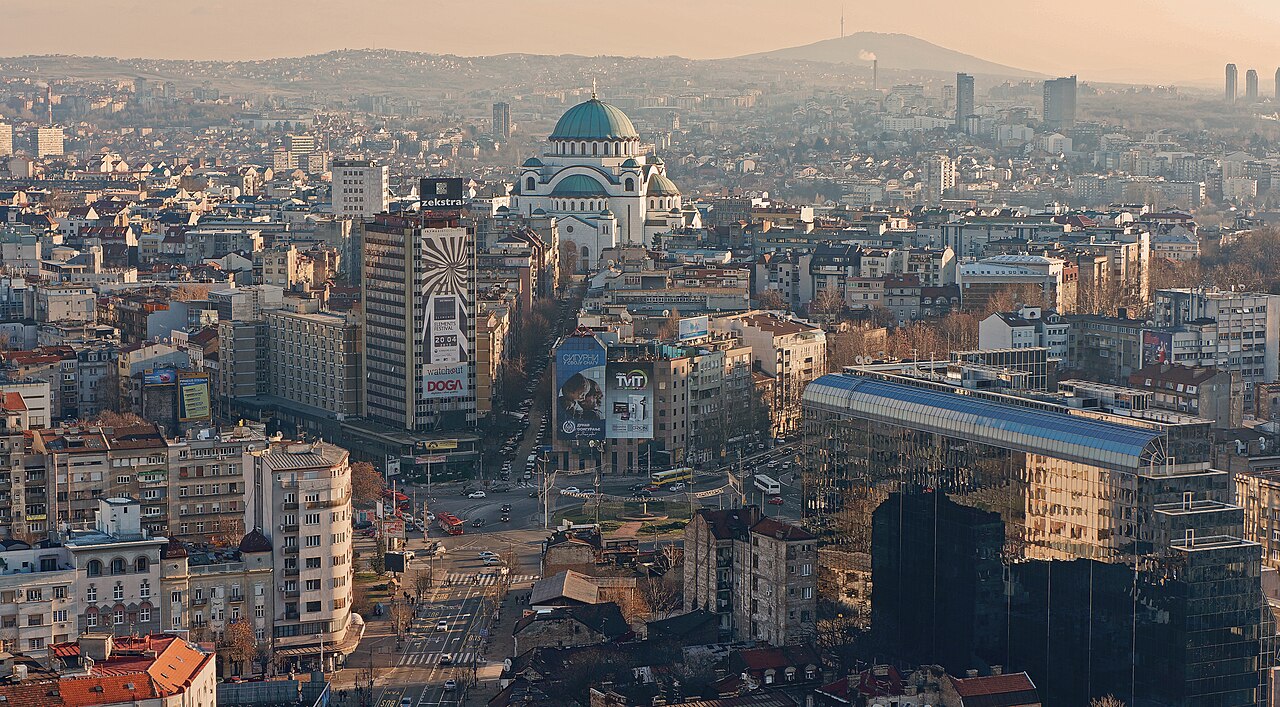
Kalemegdan Fortress, Belgrade
Public domain (Wikimedia Commons)
| Population | 1.7 million (metro area) |
| Name meaning | Beograd = "White Fortress/City" |
| Settled | 7,000+ years of continuous habitation |
| Location | Confluence of Sava and Danube rivers |
| Notable native | Nikola Tesla (born in Serbia) |
| Former capital of | 6 different states, incl. Yugoslavia |
History
Ancient Crossroads: 7,000 Years of Habitation
The site where the Sava meets the Danube has been one of the most strategically important positions in Europe since the Neolithic period. Archaeological finds at Vinča, just downstream, show a sophisticated prehistoric civilization dating back to 5700 BCE. The Celtic tribe of Scordisci founded a settlement called Singidunum here around 300 BCE. The Romans later turned it into a major legionary fortress, and it was repeatedly fought over by Huns, Avars, Byzantines, Bulgarians, Hungarians, and Ottomans across the centuries. Belgrade holds the grim record of having been destroyed and rebuilt 44 times in recorded history.
Under Ottoman and Habsburg Contest
From 1521 to 1867, Belgrade was almost continuously under Ottoman control, interrupted by Habsburg occupations in 1688–1690 and 1717–1739. The great Kalemegdan Fortress — which still dominates the city — was fought over constantly; its walls contain Roman, Byzantine, medieval Serbian, Ottoman, and Austrian layers of construction. The fortress sits on a promontory directly above the river confluence, commanding every approach by land and water. In 1867, the last Ottoman garrison departed and Belgrade became the capital of an autonomous Serbian principality.
Capital of Yugoslavia and Modern Serbia
After WWI, Belgrade became the capital of the Kingdom of Serbs, Croats and Slovenes (later Yugoslavia) in 1918. The city was devastated by German bombing on April 6, 1941 — Orthodox Easter Sunday — killing thousands of civilians. After WWII, Belgrade was rebuilt as a socialist showpiece under Josip Broz Tito, who made it the capital of socialist Yugoslavia — a non-aligned state that sat between the Iron Curtain and the West. Following Yugoslavia's dissolution in the 1990s, Belgrade became the capital of the Federal Republic of Yugoslavia, then Serbia and Montenegro, and finally the Republic of Serbia in 2006 after Montenegro's independence.
Landmarks & Culture
Kalemegdan Fortress and Park
Kalemegdan is not just a fortress — it is Belgrade's living room. The vast park surrounding the fortifications is where the city strolls, argues, plays chess, and watches sunsets over two rivers. Within the fortress complex stand a Roman well, a medieval tower, the Military Museum, a zoo, and several Orthodox chapels. From the Zindan Gate, you can see Hungary to the north across the Pannonian Plain.
Nightlife on the Sava: The Splavovi
Belgrade's most distinctive cultural institution is the splavovi — floating river barges moored along the Sava and Danube embankments that function as bars, nightclubs, and restaurants. Some are elaborate multi-deck vessels with live music and dancing until dawn. The splavovi culture emerged in the 1980s and has made Belgrade one of Europe's most celebrated nightlife destinations, with clubs that rival Ibiza and Berlin in their global reputation.
Fast Facts
- Belgrade has been capital of six different states: the Kingdom of Serbia, Kingdom of SHS, Kingdom of Yugoslavia, communist Yugoslavia, Federal Republic of Yugoslavia/Serbia & Montenegro, and modern Serbia
- Nikola Tesla was born in Smiljan (in modern Croatia) but is claimed as Serbian heritage; the Belgrade airport bears his name
- The city name Beograd translates directly as "White City" or "White Fortress" in Serbian (beo = white, grad = city/fortress)
- Belgrade hosted the first Non-Aligned Movement summit in 1961, with Tito, Nasser, and Nehru
- The Ada Ciganlija — a river island turned peninsula — hosts 3 km of artificial beaches and draws 100,000 visitors daily in summer
- Serbia is one of the world's largest producers of raspberries, accounting for over a third of global supply
📊 Serbia in Numbers
- Population: ~6.8 million (Republic of Serbia, excluding Kosovo)
- Area: 77,474 km²
- Serbia produces ~90,000 tonnes of raspberries per year — world's #1 exporter
- Belgrade has been destroyed and rebuilt 44 times in its recorded history
- The Danube passes through or borders 10 countries — more than any other river in the world