Amsterdam: Capital of the Netherlands
Built on wooden piles in a peat bog, Amsterdam became the richest city in the 17th century. Rembrandt, the VOC, Anne Frank — how well do you know the City of Canals?
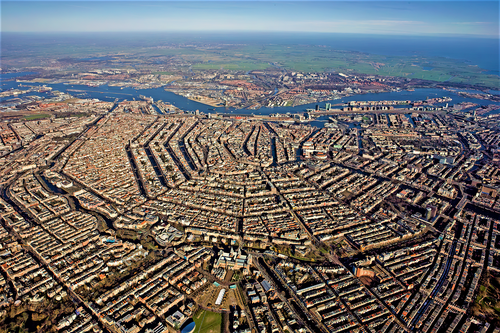
17th-century canal houses
Public domain (Wikimedia Commons)
| Population | 900,000 (city); 2.5 million (metro) |
| Founded | c. 1270 — dam on the Amstel river |
| Language | Dutch |
| Seat of gov. | The Hague (not Amsterdam) |
| Canals | 100+ km; 1,500 bridges |
| Bicycles | ~900,000 — more than residents |
History
Origins and the Golden Age
Amsterdam began as a small fishing village around 1270, when a dam was built across the Amstel river — giving the city its name. It grew rapidly as a trading port. In the 17th century — the Dutch Golden Age — Amsterdam became the wealthiest city in the world. The Dutch East India Company (VOC), founded in 1602 as the world's first publicly traded company, established trade routes across Asia. The Amsterdam Stock Exchange, founded the same year, is considered the world's oldest. Spices, textiles, diamonds, and knowledge flowed through Amsterdam's warehouses and counting houses.
Rembrandt and the Dutch Masters
Rembrandt van Rijn (1606–1669) spent most of his working life in Amsterdam, producing over 600 paintings, 400 etchings, and 2,000 drawings. His house — the Museum het Rembrandthuis — survives intact. The Night Watch (1642), his most celebrated work, hangs in the Rijksmuseum. The Golden Age also produced Johannes Vermeer, Frans Hals, Jan Steen, and dozens of other masters who defined realistic Dutch painting.
WWII and the Anne Frank House
The Netherlands was occupied by Nazi Germany from May 1940 to May 1945. Amsterdam's Jewish population — about 80,000 — was almost entirely deported and murdered; only 5,000 survived. Among those who hid was 13-year-old Anne Frank, who with her family concealed themselves in a secret annex behind a bookcase at 263 Prinsengracht from July 1942 to August 1944. Her diary, written in hiding, was published by her father after the war and has become one of the most widely read books in history. The Anne Frank House receives over 1.2 million visitors a year.
Landmarks
The Rijksmuseum
The national museum of the Netherlands houses the world's greatest collection of Dutch Golden Age art. Its centrepiece — Rembrandt's The Night Watch — is displayed in its own gallery. The collection includes 8,000 objects on permanent display, from Vermeer's The Milkmaid to Delftware pottery to 17th-century dollhouses.
The Canal Ring
Amsterdam's 17th-century canal ring (Grachtengordel) — concentric arcs of Herengracht, Keizersgracht, and Prinsengracht — is a UNESCO World Heritage Site. The narrow, tall canal houses (built on wooden piles, with hooks at the top to hoist furniture through windows too narrow for stairs) are one of the most distinctive urban landscapes in Europe.
Fast Facts
- Amsterdam has 900,000 bicycles — more than its human population
- The city sits below sea level — the Schiphol Airport, 9 km away, is 3.4 metres below sea level
- Over 2,500 houseboats are permanently moored on Amsterdam's canals
- The Van Gogh Museum holds the world's largest collection of Vincent van Gogh's works — though van Gogh himself never lived in Amsterdam
- Amsterdam's diamond industry dates to the 16th century, when Jewish refugees from Antwerp brought their skills to the city