Zagreb: Capital of Croatia
A city of two medieval hills united into one capital. Zagreb punches above its weight — from the Museum of Broken Relationships to the world's shortest funicular, and Croatia's run to the 2018 World Cup final.
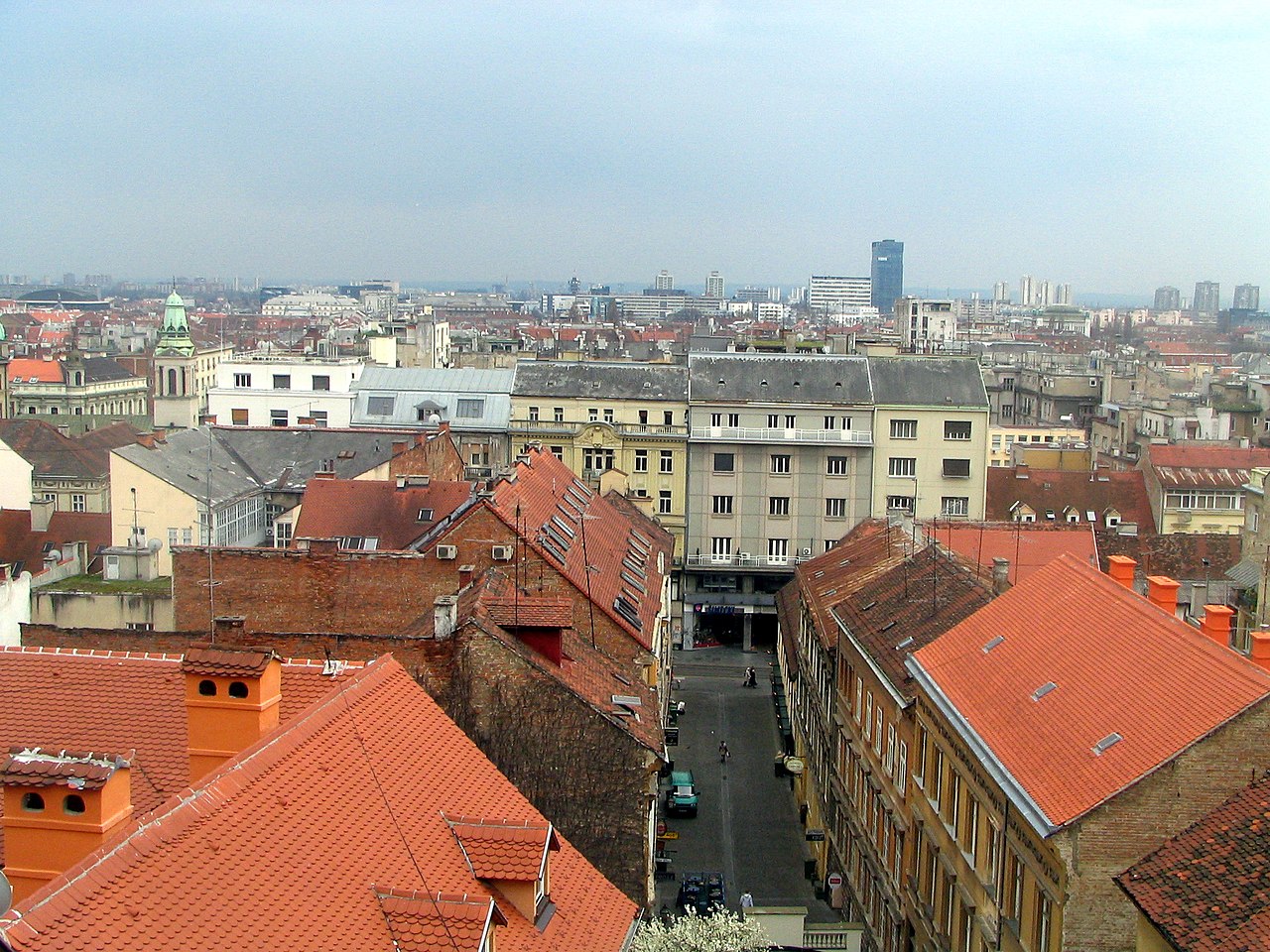
Zagreb Cathedral from Dolac market
Public domain (Wikimedia Commons)
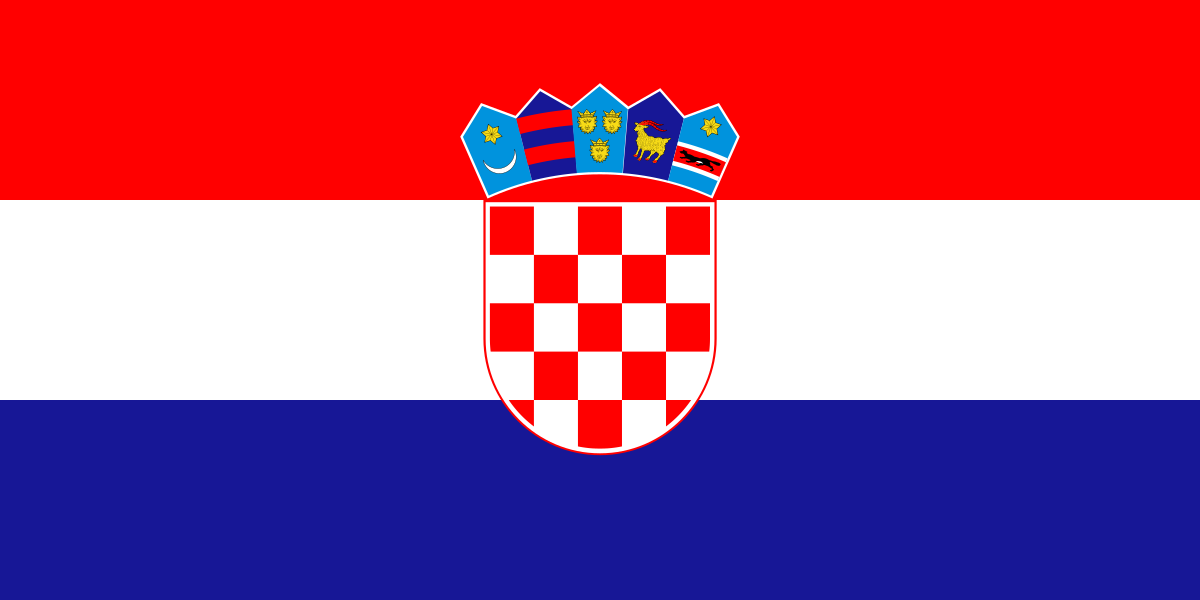
| Population | 800,000 (city); 1.2 million (metro) |
| Origins | Two medieval hills: Gradec + Kaptol |
| Language | Croatian |
| Independence | 1991 from Yugoslavia |
| Funicular | 66 m — one of shortest in world |
History
Two Hills, One City
Zagreb emerged from the merging of two medieval towns on adjacent hills. Gradec (the upper town, now Gornji Grad) was a free royal city granted a charter by King Béla IV in 1242 after the Mongol invasion. Kaptol, on the neighbouring hill, was an ecclesiastical settlement centred on the cathedral. For centuries, the two communities were rivals — separated by the stream Medveščak and occasionally at war with each other. They were formally merged only in 1850.
Yugoslavia and Independence
Zagreb was part of Austria-Hungary until 1918, then the Kingdom of Yugoslavia, then occupied by Nazi Germany (as the capital of the puppet Ustasha state), then post-war communist Yugoslavia under Tito. On June 25, 1991, Croatia declared independence from Yugoslavia. The Croatian War of Independence (1991–1995) followed; Zagreb itself was targeted by rocket attacks in May 1995. Croatia joined the EU in 2013 and the Eurozone in 2023.
Landmarks
St. Mark's Church
St. Mark's Church in Gradec square is Zagreb's most photographed landmark — specifically its roof, which is covered in colourful glazed tiles arranged in two coats of arms: the tripartite coat of arms of Croatia, Dalmatia and Slavonia on the left, and the emblem of Zagreb on the right. The church itself dates to the 13th century; the tiled roof was restored in the 19th century.
Museum of Broken Relationships
Zagreb's most unusual museum began as a touring art project in 2006, created by Olinka Vištica and Dražen Grubišić after their own breakup. The Museum of Broken Relationships collects donated objects from ended relationships worldwide, each with a short explanatory text. The Zagreb permanent collection opened in 2010, in the Baroque palace on Ćirilometodska Street in Gornji Grad. The concept has since spawned satellite exhibitions worldwide and a Hollywood film. It won the Council of Europe Museum Prize in 2011.
The Uspinjača Funicular
The Uspinjača, connecting the Lower and Upper towns, is 66 metres long — making it one of the shortest public funiculars in the world. It has been operating since 1890, originally steam-powered. The journey takes about 64 seconds and rises 30 metres — short enough that most tourists are surprised it has a ticket.
Fast Facts
- Nikola Tesla was born in Smiljan (now Croatia) in 1856 — Croatians claim him proudly
- Croatia reached the 2018 FIFA World Cup final — their best ever result; they lost 4–2 to France
- Zagreb was struck by an earthquake measuring 5.5 on the Richter scale in March 2020, during the COVID-19 lockdown
- Dolac market, the central open-air food market above the Lower Town, has operated since 1930 — the "belly of Zagreb"
- Zagreb Cathedral's twin spires, visible from across the city, make it the tallest building in Croatia