Pristina: Capital of Kosovo
Capital of Europe's youngest country. Once Ottoman, then Yugoslav, Pristina is the heart of Kosovo — a partially recognised state with one of the youngest populations on the continent.
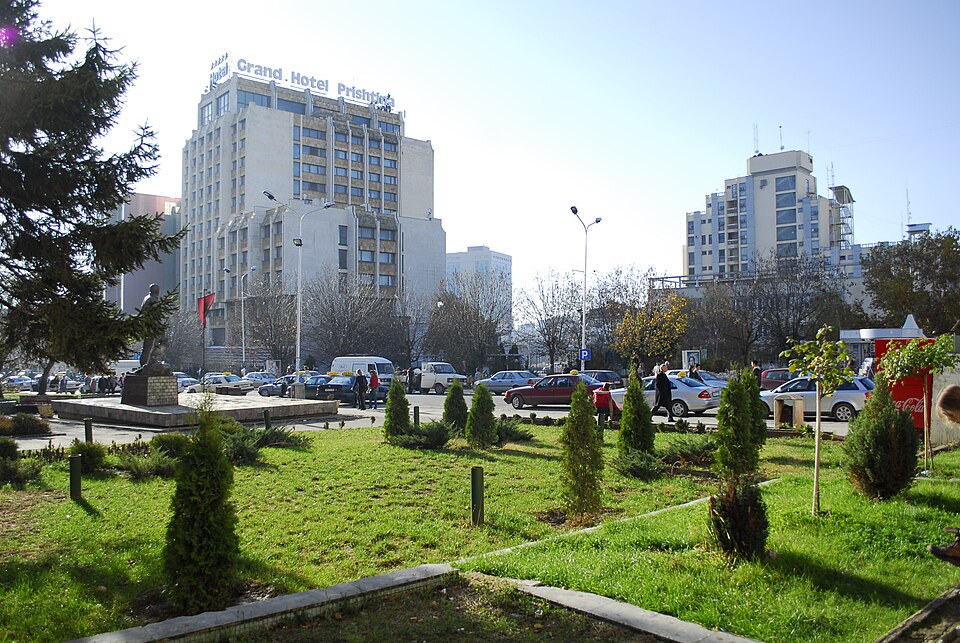
Central Pristina
Public domain (Wikimedia Commons)
| Population | ~600,000 (metro) |
| Independence | 2008 (from Serbia) |
| Languages | Albanian & Serbian |
| Ottoman rule | ~500 years (15th c. – 1912) |
| Recognised by | ~100 UN states (not Serbia) |
| Region | Central Balkans |
History
Ottoman centuries
The Pristina area has been settled since antiquity and lay near the medieval Serbian heartland. The nearby plain of Kosovo Polje ("Field of Blackbirds") was the site of the famous Battle of Kosovo in 1389, fought between Ottoman forces and a Serbian-led coalition — an event that became central to Serbian national memory. Pristina then spent nearly five centuries under Ottoman rule, which left its mosques, hammams, and old bazaar quarter.
Yugoslavia and autonomy
In the 20th century Kosovo became part of Yugoslavia, as an autonomous province within the Republic of Serbia, with Pristina as its seat. The stripping of that autonomy in 1989 deepened tensions between the Albanian majority and Belgrade, helping set the stage for the conflicts of the 1990s.
War and independence
The Kosovo War of 1998–99 ended with NATO intervention and a period of UN administration (UNMIK), with security provided by NATO's KFOR force. On 17 February 2008, Kosovo declared independence from Serbia. That independence is recognised by around 100 UN member states — but not by Serbia, Russia, or China — making Kosovo a partially recognised state and one of the youngest countries in the world.
Landmarks
A young, energetic capital
Pristina has one of the youngest populations in Europe — a median age under 30 — and the city centre buzzes with cafés, students, and street life. Landmarks include the striking National Library of Kosovo (famous for its domes and metal-mesh exterior), the Newborn monument unveiled on independence day in 2008, and statues honouring figures such as Mother Teresa, who was of Albanian heritage.
Fast Facts
- Kosovo is Europe's youngest country, independent only since 2008
- Its population is roughly 90% ethnic Albanian
- Independence is not recognised by Serbia, Russia, or China
- The 1389 Battle of Kosovo was fought on the plain just outside the city
- Kosovo has one of the youngest median ages on the continent