Oslo: Capital of Norway
Founded by Vikings, renamed by a Danish king, and enriched beyond imagination by North Sea oil. Oslo awards the Nobel Peace Prize, houses the world's largest sovereign wealth fund, and is consistently one of the most liveable cities on Earth.
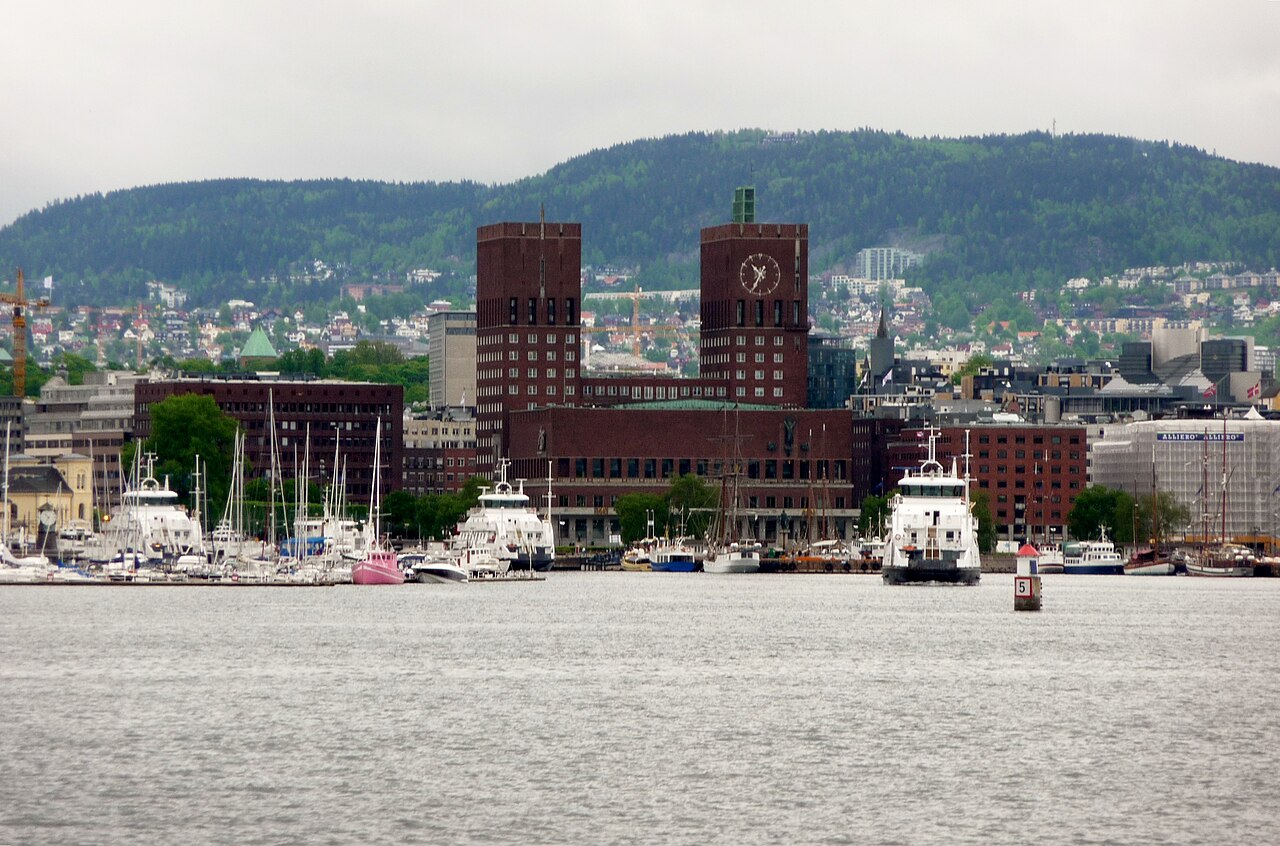
Oslo Opera House on the fjord
Public domain (Wikimedia Commons)

| Population | 700,000 (city); 1.1 million (metro) |
| Founded | c. 1000 AD; called Christiania 1624–1925 |
| Language | Norwegian (Bokmål / Nynorsk) |
| Oil Fund | World's largest sovereign wealth fund |
| Nobel Peace Prize | Awarded in Oslo City Hall every Dec 10 |
History
Viking Origins to Christiania
Oslo was founded around 1000 AD — one of the oldest Scandinavian capitals. In 1624, a catastrophic fire destroyed the medieval city. King Christian IV of Denmark-Norway (Norway was then under Danish rule) rebuilt it on a new site at the foot of the Akershus Fortress and renamed it Christiania after himself. The city kept that name for 300 years; it was renamed Kristiania in 1877 and finally reverted to Oslo in 1925, following Norwegian independence from Sweden (1905).
The Nobel Peace Prize
Alfred Nobel's 1895 will specified that the Peace Prize should be awarded by a Norwegian committee — a decision reflecting the politics of the time (Norway and Sweden were then in a union, and Nobel may have wanted the more neutral partner handling the politically sensitive peace award). The prize is awarded every December 10 in Oslo City Hall — all other Nobel Prizes are awarded in Stockholm. Among the most debated laureates: Henry Kissinger (1973), Yasser Arafat (1994), and Barack Obama (2009, just nine months into his presidency).
Oil and the Wealth Fund
Norway discovered oil in the North Sea in 1969. Rather than spending the windfall directly, Norway established the Government Pension Fund Global (colloquially "the Oil Fund") in 1990 to invest the revenues. Today it holds over $1.7 trillion in assets — the world's largest sovereign wealth fund — owning approximately 1.5% of all listed companies in the world. The fund finances Norway's welfare state without touching the oil money itself.
Landmarks
Vigeland Sculpture Park
The Vigeland Sculpture Park in Frogner Park is the world's largest sculpture installation by a single artist. Gustav Vigeland (1869–1943) spent 40 years creating 212 sculptures in bronze, granite, and wrought iron — all depicting the human life cycle, from infancy to death. The centrepiece is the Monolith: a 14-metre column of 121 intertwined human figures. Entry is free.
Edvard Munch and The Scream
The Scream (1893) by Edvard Munch is Norway's most famous artwork and one of the most recognisable images in the history of art. Munch described the inspiration: walking at sunset, he felt "an infinite scream passing through nature." Four versions exist; two are in Oslo's National Museum (which opened a vast new building in 2022) and the Munch Museum.
Fast Facts
- The Oslo Accords (1993) — Israeli-Palestinian peace framework — were secretly negotiated in Oslo; Arafat and Rabin shared the Nobel Peace Prize
- Norway has the world's highest electric vehicle adoption rate — over 80% of new car sales are EVs
- The Kon-Tiki Museum houses Thor Heyerdahl's balsa raft that crossed the Pacific Ocean in 1947 (101 days)
- Oslo's Holmenkollen ski jump has hosted international ski competitions since 1892
- Norway's GDP per capita is one of the highest in the world — largely driven by oil wealth