William Henry Harrison: 31 Days
The longest inaugural address. The shortest presidency. The man who defined a constitutional crisis by dying — and whose death may have mattered more than his life.
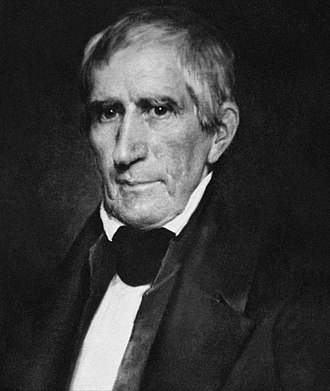
James Reid Lambdin, 1835
Public domain
| Born | February 9, 1773 — Berkeley Plantation, Virginia |
| Died | April 4, 1841 — Washington D.C. (age 68) |
| Presidency | 9th President, March 4 – April 4, 1841 (31 days) |
| Party | Whig |
| Spouse | Anna Tuthill Symmes (m. 1795) |
| Profession | Soldier, politician, farmer |
Early Life and Family
William Henry Harrison was born on February 9, 1773 at Berkeley Plantation on the James River in Virginia — one of the great tobacco plantations of colonial Virginia. His father, Benjamin Harrison V, was a signer of the Declaration of Independence and Governor of Virginia. William studied medicine briefly, then joined the army in 1791 at age 18 rather than face his mounting debts.
He married Anna Tuthill Symmes in 1795, eloping after her father refused permission. They had ten children — more than any other president — and 48 grandchildren. His grandson Benjamin Harrison would become the 23rd president.
Before the Presidency
Battle of Tippecanoe
Harrison built his military and political career on the frontier. As Governor of the Indiana Territory, he negotiated (often through dubious means) numerous land cession treaties with Native American tribes. In 1811 he led forces against the confederacy built by the Shawnee leader Tecumseh and his brother the Prophet, defeating them at the Battle of Tippecanoe. The battle was neither a decisive military victory nor a strategic success — but it made Harrison a national hero.
The Campaign of 1840
Harrison's 1840 presidential campaign — "Tippecanoe and Tyler Too" — was the first modern media-driven election. His team invented the slogan, the campaign song, and the "Log Cabin and Hard Cider" imagery to portray Harrison as a frontier everyman (he actually lived in a mansion). It worked spectacularly against incumbent Van Buren.
The Presidency (March 4 – April 4, 1841)
Harrison delivered the longest inaugural address in U.S. history — nearly 8,500 words, read over almost two hours on a cold, wet March day without a hat, coat, or gloves. He was 68 years old. He developed what appeared to be pneumonia within days. Modern historians suggest he may have actually suffered from enteric fever contracted from the contaminated White House water supply.
He died on April 4, 1841 — exactly one month after taking office. He had time to appoint a Cabinet but passed no legislation and made no major decisions.
Death and Its Consequences
Harrison's death created an immediate constitutional crisis: was Vice President Tyler the actual president, or merely "acting president"? Tyler insisted he was the full president, moved into the White House, and refused to open mail addressed to "Acting President Tyler." His precedent — that the vice president becomes president, not acting president — was followed by every subsequent vice presidential succession and was finally codified in the 25th Amendment (1967).
📜 Notable Quote
"There is nothing more corrupting, nothing more destructive of the noblest and finest feelings of our nature, than the exercise of unlimited power."
From his inaugural address — ironic, given that he never had a chance to exercise any power at all.
Legacy
Harrison's presidency itself had no policy legacy — there was simply no time. His significance is entirely constitutional: his death forced the question of presidential succession and produced a clear answer. The Tecumseh Curse — the legend that presidents elected in years divisible by 20 would die in office — is named after his adversary. Of the seven presidents elected in such years between 1840 and 1960, all died in office.
📊 How History Rates William Henry Harrison
- C-SPAN Historians Survey (2021): Ranked #40 (near bottom — no time to govern)
- Siena College Research Institute (2022): Ranked #37
Harrison is consistently ranked low simply because there is almost nothing to evaluate. His constitutional legacy — the succession precedent set by Tyler — may be his most significant contribution, though he played no part in it.
How well do you know the ninth president?
Put your knowledge to the test.
Take the William Henry Harrison Quiz →