James A. Garfield: Killed by His Doctors
Shot after four months in office, Garfield lingered for 79 days — killed more by his doctors' probing than the assassin's bullet. A remarkable man who never got his chance.
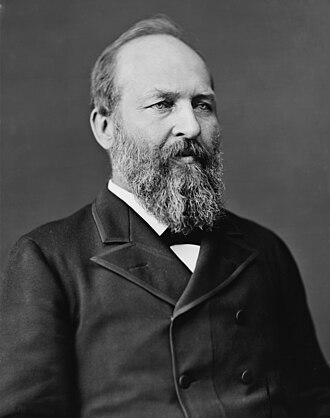
Ole Peter Hansen Balling, 1881
Public domain
| Born | November 19, 1831 — Orange Township, Ohio |
| Died | September 19, 1881 — Elberon, New Jersey (age 49) |
| Presidency | 20th President, March 4, 1881 – September 19, 1881 |
| Party | Republican |
| Spouse | Lucretia Rudolph (m. 1858) |
| Profession | Scholar, college president, Union general, Congressman |
Early Life: The Self-Made American
James Abram Garfield was born on November 19, 1831 in a log cabin in Orange Township, Ohio — the last president born in a log cabin. His father died when he was two; he was raised in poverty by his mother, who worked desperately to keep the family together. As a teenager he worked the towpaths of the Ohio and Erie Canal before finding his way to school.
His academic trajectory was extraordinary. He graduated from Williams College in Massachusetts in 1856, returned to Hiram College in Ohio as a professor of Greek and Latin, and was appointed its president at age 26. He was the only president to have served as a college president. He also discovered he could write Latin with one hand and Greek with the other simultaneously — a party trick he reportedly performed for guests.
Military and Political Career
Garfield served in the Civil War, rising to major general. His most significant military action was at the Battle of Middle Creek in January 1862, where he drove Confederate forces from eastern Kentucky. He resigned his commission in 1863 to take his seat in Congress, serving for nine terms before his presidential nomination in 1880.
His 1880 presidential nomination was itself a political accident — he arrived at the Republican convention as campaign manager for another candidate and emerged, after 36 ballots, as the compromise nominee. He ran on a platform that included civil service reform — the end of the spoils system of rewarding party loyalists with government jobs.
The Assassination
On July 2, 1881 — just four months after his inauguration — Garfield was shot twice at the Baltimore and Potomac Railroad Station in Washington by Charles J. Guiteau, a delusional office-seeker who believed he deserved an ambassadorship for his (minimal) contribution to Garfield's campaign. One bullet grazed his arm; the other lodged near his spine. The spine bullet was almost certainly not fatal.
What followed was one of the great medical tragedies in history. Garfield's physicians — led by Dr. Willard Bliss — repeatedly probed the wound with unsterilized fingers and instruments, searching for the bullet. Alexander Graham Bell attempted to locate it with a metal detector, but the device gave false readings everywhere — later determined to be caused by the metal springs in Garfield's mattress. The probing introduced massive infection. Garfield's wound, initially 3 inches deep, became a 20-inch infected cavity. He lost 80 pounds in 79 days.
Garfield died on September 19, 1881 in Elberon, New Jersey, where he had been moved to escape Washington's summer heat. The proximate cause of death was septic poisoning — caused almost entirely by the medical treatment. At Guiteau's trial, the prosecution argued that Guiteau had shot the president; the defense argued the doctors had killed him. Guiteau was hanged anyway.
Legacy
Garfield's assassination had one lasting political consequence: it made civil service reform politically inevitable. The man who killed Garfield was a disappointed patronage-seeker; within two years, Congress passed the Pendleton Civil Service Reform Act of 1883, establishing merit-based hiring for federal positions. The spoils system that had motivated his killer was, in death, what Garfield could not achieve in life.
📜 Notable Quote
"The truth will set you free, but first it will make you miserable."
A remark attributed to Garfield — a man of genuine intellectual honesty who understood that reality must be faced before it can be changed.
📊 How History Rates James A. Garfield
- C-SPAN Historians Survey (2021): Ranked #26
- Siena College Research Institute (2022): Ranked #21
Garfield ranks in the middle tier — surprisingly well for someone who served only 200 days. Historians credit him with what he promised rather than what he achieved, recognizing that his death, not his failure, ended his presidency.
How well do you know the president killed by his doctors?
Put your knowledge to the test.
Take the James A. Garfield Quiz →